

June 17, 2025
Today, while at work, I was asking myself something.
In regards to the orbital period of planet Sedna, why would it be so important to hide the truth?
Now, of course, NASA, the team of expert astronomers who discovered the planet, the astronomy community in general, and everyone else involved with releasing planetary information to the public will probably say, “Oh, we made a mistake.”
Well, at this point, that’s not acceptable or believable.
So, back to my question.
Why would they need to lie about the orbital period of a planet? What are they hiding?
Professional researchers made a connection to a planet they call Nibiru and major cataclysmic upheaval and natural destruction here on earth. Every time Nibiru nears the Sun or earth during its orbit, it causes major disruptions in the earth’s magnetic field and weather patterns.
Researchers claim Nibiru was clearly visible from earth right before the Flood of Noah.
Naturally, people were concerned, and they began asking questions concerning the validity of this research. Also, they wanted to know if Nibiru did in fact exist, where in its orbit was it at right now.
They were told not to worry because Nibiru had a 3,600-year orbit, and it was on its way back out to the furthest depths of the solar system. It would be a long-long time before Nibiru’s return.
All was settled. Out of sight out of mind.
But then, I discovered that planet Sedna was fast approaching and due to make her closest approach to our sun around 2076. So, planet Sedna is on her way in, but there’s nothing to worry about because Sedna isn’t Nibiru, and Sedna’s orbital period is 11,400 years and not 3,600 years.
Right?
Well, that’s what we’ve been led to believe since Sedna’s discovery in 2003, but last month I figured out that the 11,400-year orbital period was incorrect.
As a matter of fact, after conducting my research, Sedna’s orbital period was closer to 3,600 years than 11,400 years.
Personally, I believe that’s what they’re trying to cover up. They don’t want the public to know that there’s a possibility that planet Senda could cause major disruptions here on earth.
Oh my God, this has gone back to the beginning of time. Humans on earth were lied to about Noah’s Flood, well, all of them except Noah and his family. So, that’s the trend. Keep the big secret from humanity and only reveal it to a select few.
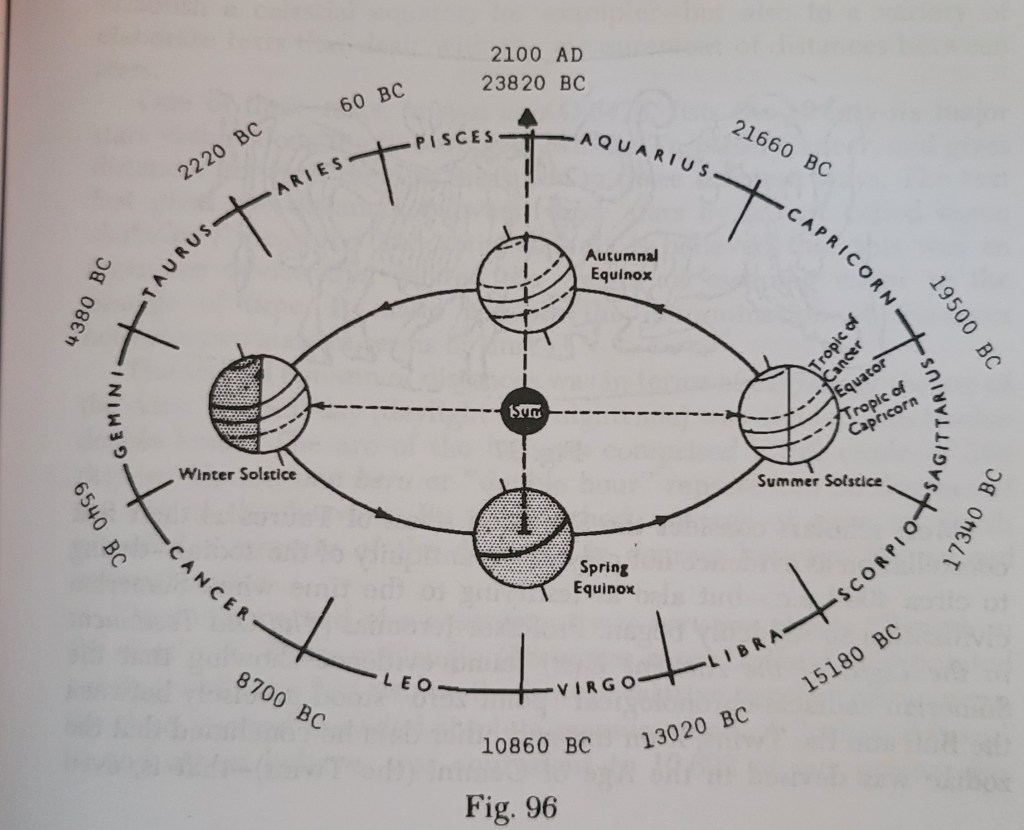
The picture above is a breakdown of time according to astrological ages. Currently, we’re in the Age of Pisces. The Age of Pisces began in 60 BC, and it ends in 2100 AD.
In 2100 AD, we’ll be in the astrological Age of Aquarius, and if you look closely, you’ll see this cycle of time, which is known as the Grand Cycle, began there on the Pisces/Aquarius border or cusp in 23,820 BC. Each zodiac sign, or astrological age, is a period of 2,160 years, so if you multiply 2,160 years by twelve signs, you arrive at 25,920 years. That’s how long a Grand Cycle is.
Knowing this background information is important. Not only are we coming to the end of Age of Pisces, a period of 2,160 years that began in 60 BC, but we’re also coming to the end of this entire cycle that began in 23,820 BC. Right now, we’re 75 years aways from the Aquarian Age and a brand-new Grand Cycle!
While all that is going on, planet Sedna is supposed to reach her closest approach to our sun around 2076. That’s only 51 years away and 25 years before the Age of Aquarius.
Researchers believe that the Flood of Noah occurred at some point near the border or cusp of Virgo and Leo, and according to our picture above, that would’ve been between 13,020 BC and 10,860 BC.
The Grand Cycle is split in half. There’s a light half and a dark half. The light half is from the beginning of Aquarius to the end of Virgo. Aquarius, Capricorn, Sagittarius, Scorpio, Libra, and Virgo are the six signs that make up the light half.
The dark half of the Grand Cycle is from Leo to the end of Pisces. Leo, Cancer, Gemini, Taurus, Aries, and Pisces are the six signs that make up the dark half.
So, as we’re coming into the Age of Aquarius and beginning a brand-new 25,920-year-period, we’re also reentering the light half of the Grand Cycle.
That means the Flood of Noah occurred as we were leaving the light half of the Grand Cycle and entering the dark half.
As Sedna reaches her closest approach to the Sun, we’re getting closer to the opposition of that point, and once again we’ll be transitioning-this time from dark back to light.
If Sedna has a 3,600-year orbit, that puts her in the right place at the right time.
I believe that Sedna’s perihelion, or closest approach to the sun occurs when she reaches the astrological sign, Cancer. Senda reaches the Zero point of Cancer on August 8, 2065.
That’s only 40 years away and not 51, but if you use the year 2065 as the marker and deduct 3,600 for the year Sedna was last on the Zero degree of Cancer or at perihelion, we get the year 1,524 BC.
Deduct 3,600 from 1524 BC, and it’s 5124 BC. Deduct 3,600 from 5124 BC, and it’s 8,724 BC (Cancer/Leo Border). One more time, deduct 3,600 from 8,724 BC, and it’s 12,324 BC.
If Sedna reached her closest approach to the sun in 12,324 BC, that would’ve put her in the right place at the right time if Noah’s Flood also occurred between 13,020 BC and 10,860 BC.
If there’s any correlation between the Flood and Sedna’s perihelion, then that means as far as time in the Grand Cycle is concerned, Noah’s Flood occurred somewhere between the 20th and the 22nd degree of Virgo because 12,324 BC is about the 21st degree of Virgo.
If Sedna’s orbital period is 3,600 years, then this works out perfectly, and that’s the reason why they don’t want anyone knowing the truth.
 Nooz Buffet